Tiếng Việt
 中文 (中国)
Navigating ESG in the Transport Sector
Reducing emissions is not simply about legal compliance; it is a strategic approach to optimizing costs and enhancing competitiveness. Transportation, warehousing, and seaport operations currently account for 11% of global greenhouse gas emissions. In Vietnam alone, the transportation sector emitted approximately 39.3 million tons of CO2 (according to 2023 data), with road transport accounting for up to 84%.
The financial market and macro-regulators have established clear standards:
-
Transparent regulations: More than 35 countries have issued regulations mandating corporate ESG disclosure.
-
Investment criteria: 90% of financial institutions thoroughly review ESG indicators before making capital investment decisions.
-
Value creation: Evidence shows that companies with strong ESG practices are valued 20% higher than competitors who ignore this factor.
Industry-Specific ESG Materiality Framework for Logistics Enterprises
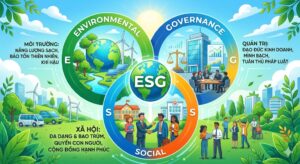
For effective implementation, businesses must focus on the material topics that have the greatest impact on the environment, society, and the economy. NASA Logistics applies the following assessment framework to establish our action priorities:
| Core Element | Material Topic | Practical Solutions & Impacts |
| Environment (E) | Energy Consumption & Emissions | Transitioning to Sustainable Aviation Fuel (SAF), electrifying fleets/warehouse equipment, and utilizing renewable electricity. |
| Environment (E) | Water Pollution & Waste | Strict control over major operational assets such as seaports, vessels, and distribution centers. |
| Social (S) | Occupational Health & Safety | Preventing occupational accident risks specific to vehicle operation, loading/unloading, and delivery. |
| Social (S) | Labor in the Value Chain | Expanding governance to the external partner network (outsourced transport providers, customs, temporary labor). |
| Governance (G) | Supply Chain Security | Ensuring on-time, stable cargo flow and the ability to respond to disruptions in the supply chain. |
| Governance (G) | Business Ethics & Cybersecurity | Cross-border legal compliance, anti-corruption, and customer data security in the digital era. |
Greenhouse Gas (GHG) Inventory and Management Methods in ESG
A greenhouse gas inventory is a mandatory step to determine an organization’s total emissions. The calculation is performed using a scientific conversion formula:
CO2e = Activity Data x Emission Factor x GWP
(Where GWP is the Global Warming Potential, used to convert to total equivalent CO2 emissions). Find out more here.
According to the GHG Protocol standard, emissions are transparently categorized into 3 scopes:
-
Scope 1 (Mandatory): Direct emissions from sources owned or controlled by the company (e.g., fuel combustion for generators, vehicle gasoline, refrigerant leaks).
-
Scope 2 (Mandatory): Indirect emissions from the purchase of electricity, steam, heating, or cooling for company operations.
-
Scope 3 (Regulatory dependent): Emissions from the value chain (e.g., purchased goods/services, upstream/downstream transportation, waste processing, employee commuting).
4 Green Transition Strategies to Optimize Costs Under the ESG Framework
NASA Logistics focuses on practical solutions that deliver a dual impact: reducing emissions and increasing operational efficiency. Your business can immediately apply the following 4 strategies:
-
Optimizing energy systems: Installing rooftop solar panels at warehouses helps meet 10% – 30% of energy demand, with a payback period of just 3 – 5 years.
-
Electrifying internal vehicles: Transitioning to electric forklifts to replace diesel/gasoline models reduces about 3 tons of CO2/vehicle/year, providing a rapid return on investment within 2 – 3 years.
-
Upgrading refrigeration equipment: Replacing old refrigerants with low-GWP alternatives eliminates almost all greenhouse gas emissions from leakage incidents.
-
Leveraging supportive policies: Capitalizing on the Government’s 2%/year interest rate reduction mechanism for businesses borrowing capital to implement green projects, circular economies, and ESG frameworks.
Pioneering a Green Delivery Network with Electric Vehicle Services
Going beyond the electrification of internal warehouse vehicles, the most breakthrough step for businesses to drastically cut CO2 emissions is greening road transportation. Understanding this urgent need, NASA Logistics proudly introduces our advanced Electric Vehicle (EV) Logistics Solution. Transitioning from fossil-fuel trucks to a 100% electric truck fleet provides a zero-emission delivery solution, smooth operation, and long-term fuel cost optimization. Partners can learn more about our Electric Truck Rental Services to directly experience a comprehensive green supply chain from the storage warehouse to the consumer’s hands.
Conclusion: Integrating ESG into the business model helps establish safe, transparent, and eco-friendly operational processes. Ensuring robust E-E-A-T standards in experience and professionalism, NASA Logistics is always ready to pioneer the application of these criteria to provide the most excellent and sustainable delivery services for our partners.