Tiếng Việt
 中文 (中国)
How to Read an SDS to Identify Hazard Classes, UN Numbers, and Packing Groups
In international logistics, handling dangerous goods (DG) demands absolute precision. A single misstep can lead to safety hazards, severe customs delays, or heavy fines. The most critical tool to prevent this is the SDS (Safety Data Sheet).
With the latest 2025–2026 updates from the UN Model Regulations Rev. 24 and Vietnam’s Decree No. 161/2024/NĐ-CP, mastering how to read an SDS is more vital than ever. Here is your quick, practical guide to identifying the 3 core elements of DG compliance: Hazard Class, UN Number, and Packing Group.
Why Is the SDS Your Compliance Shield?
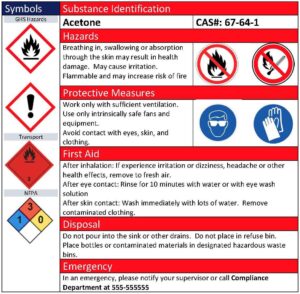
An SDS is a mandatory 16-section document under the GHS (Globally Harmonized System). For logistics professionals, Section 14 (Transport Information) is the absolute core. Reading it correctly ensures you:
-
Identify if a product is officially classified as dangerous goods.
-
Comply with IATA (air), IMDG (sea), and ADR (road) regulations.
-
Select the correct packaging and execute seamless customs declarations.

3 Core Steps to Extract Critical DG Information
When you open Section 14 of an SDS, focus on these three pillars:
1. Identify the Hazard Class (Class/Division)
The UN classifies dangerous goods into 9 distinct classes:
-
Class 1: Explosives | Class 2: Gases | Class 3: Flammable Liquids
-
Class 4: Flammable Solids | Class 5: Oxidizers & Organic Peroxides
-
Class 6: Toxic & Infectious | Class 7: Radioactive | Class 8: Corrosives
-
Class 9: Miscellaneous (e.g., Lithium/Sodium-ion batteries, environmental hazards)
How to read: Look for “Class” or “Division”. Note any subsidiary hazards in parentheses—e.g., 6.1 (Subsidiary 8) means a toxic substance that is also corrosive.
Trend Check: New 2025-2026 updates have redefined primary hazards for substances like TMAH (shifted to Div 6.1).
2. Locate the UN Number
The UN number is a 4-digit code prefixed by “UN” (e.g., UN1263 for Paint).
How to read: Find “UN number” or “UN/ID no.” in Section 14. Always cross-reference this number with the Proper Shipping Name (PSN) to ensure a perfect match.
Trend Check: Keep an eye out for newly introduced UN numbers for emerging technologies like sodium-ion batteries under the IATA DGR 67th Edition (2026).
3. Determine the Packing Group (PG)
The Packing Group indicates the degree of danger and dictates your packaging requirements:
-
Packing Group I: High danger (requires maximum-security, UN-certified packaging).
-
Packing Group II: Medium danger.
-
Packing Group III: Low danger.
How to read: Look for “Packing Group” or “PG” (expressed in Roman numerals like I, II, or III). Note that some classes (like Class 2 gases) do not use packing groups.
Fast-Track Checklist for Logistics Teams
-
Verify the Date: Ensure the SDS is updated for 2025+ and compliant with UN Rev. 24.
-
Scan Section 14: Note down the UN Number $\rightarrow$ Class $\rightarrow$ Packing Group $\rightarrow$ PSN.
-
Check Local Rules: In Vietnam, ensure the SDS is available in Vietnamese/bilingual format and cross-reference it with Decree 161/2024/NĐ-CP for road transport permits.
Conclusion
Accurately interpreting an SDS is a non-negotiable skill for modern importers, exporters, and logistics providers. Staying aligned with the latest global and local regulations protects your cargo, your business, and your reputation.
Need expert help with Dangerous Goods? Contact us now!