Tiếng Việt
 中文 (中国)
Coupang’s Mega-Warehouse Inferno: A Wake-Up Call for Fire Safety in Logistics Centers
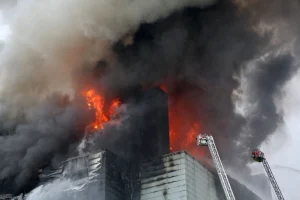
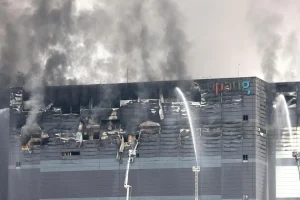
Recently, Logistics Center No. 32 of e-commerce giant Coupang in Incheon, South Korea, was engulfed in flames. The hundreds of hours spent fighting the fire not only caused massive property damage and threatened supply chain disruptions, but also sounded an alarm regarding fire safety in modern mega-warehouses.
1. Staggering Numbers Behind the Inferno
The blaze at Coupang’s Logistics Center No. 32 was no ordinary warehouse fire. Its complexity and scale are reflected in the following alarming figures:
| Criteria | Detailed Information |
| Location | Logistics Center No. 32 (Incheon, South Korea) |
| Warehouse Scale | 8 floors, 299,000 m² (equivalent to 42 football fields) |
| Mobilized Forces | 812 firefighters and 231 specialized vehicles and equipment |
| Firefighting Duration | 61 hours to contain the main fire; 109 hours to extinguish completely |
Fortunately, all personnel working inside the building were evacuated safely and promptly as soon as the fire broke out, with no casualties reported among the staff.
2. Why Was the Fire So Difficult to Extinguish?
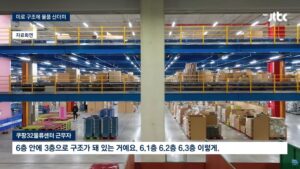
According to firefighting experts, e-commerce mega-warehouses always pose a colossal challenge during a fire due to three core reasons:
-
Massive Fire Load: The warehouse stored millions of products packed in cardboard boxes, foam, and shrink wrap—materials that ignite rapidly and release intense heat when burned.
-
Vast Floor Spaces and Structural Layout: Oversized floor areas combined with high-rack systems act as natural “chimneys,” providing an abundant supply of oxygen that causes flames to spread at breakneck speed.
-
Severe Accessibility Barriers: Dense shelving layouts and the risk of steel structures collapsing under extreme temperatures prevented firefighters from entering the building to apply water directly to the seat of the fire. Instead, they had to spend days cooling the structure from the outside.
3. Consequences and Lessons on Fire Safety
The fire not only resulted in substantial physical damage for Coupang but also threatened to disrupt the logistics supply chain across the Greater Seoul metropolitan area, directly impacting online merchants.
Moreover, the incident once again raises serious questions about safety standards at logistics centers, which are mushrooming to serve the e-commerce era. Statistics show that South Korea recorded over 7,300 warehouse fires over the past six years alone, causing property damage exceeding 1.450 trillion won.
Many experts propose that the logistics industry needs an overhaul of safety standards, including the installation of automatic sprinkler systems capable of penetrating between individual shelves, expanding the capacity of on-site fire water tanks, and enhancing monitoring with advanced sensors to detect fires early.
4. Key Lessons for Supply Chain Managers
From Coupang’s massive warehouse fire, supply chain managers can draw five core takeaways:
-
Risk Diversification: Avoid putting all eggs in one basket. Combine mega-warehouses with a network of satellite hubs to ensure the flow of goods is not completely paralyzed if one location suffers an outage.
-
Business Continuity Planning (BCP): Systems must be capable of automatically rerouting orders to nearby fulfillment centers or immediately activating backup logistics partners (3PLs).
-
Investment in Synchronized Safety Technology: Fire safety equipment (IoT thermal sensors, AI cameras, intelligent fire suppression systems) must be upgraded to match the immense scale of the facility.
-
Fire-Resilient Space Design: Establish fire partitions, create safe clearance zones between shelving units, and isolate areas storing highly flammable materials (cardboard, nylon, foam).
-
Real-Time Data Management: Continuously synchronize inventory on the cloud to immediately identify damaged stock, thereby updating sales systems and preventing customers from placing orders for unavailable items.
Follow us at NASA Logistics to stay updated with the latest insights!
CONTACT INFORMATION
-
Email: sale@nslvn.com
-
Hotline: 0902.369.668
-
Address:
-
Office: 132-134 Nguyen Gia Tri, Thanh My Tay Ward, Ho Chi Minh City, Vietnam
-
Warehouse: Long Thanh ICD Dry Port, 804 AH17, Long Thanh, Dong Nai, Vietnam
-