Tiếng Việt
 中文 (中国)
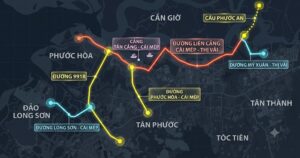
On the morning of July 5th, Ho Chi Minh City marked a significant milestone in its maritime economy and supply chain development strategy with the official groundbreaking ceremony of the QTM International Port. Located in Phu My Ward and serving as a crucial link within the Cai Mep – Thi Vai deep-water port cluster, this mega-project is poised to inject massive logistics capacity into the Southern Key Economic Region.
Impressive Scale and Operational Capacity
Backed by a total investment of nearly 6,900 billion VND, the QTM International Port spans a vast area of over 80 hectares. Once fully operational, the port is designed to handle an impressive capacity of approximately 16 million tons of cargo annually. This development will not only alleviate current trade bottlenecks but also create a seamless and highly efficient flow of goods to meet the soaring demands of global trade.
The project delivers a comprehensive logistics ecosystem, featuring:
-
Logistics and Warehousing Hub: Covering nearly 200,000 square meters to serve diverse storage, fulfillment, and general cargo handling needs.
-
Modern Berthing System: A scale of 8 state-of-the-art berths, capable of accommodating mega-vessels ranging from 60,000 DWT, with future orientation to receive ships up to 100,000 DWT.
-
Strategic Roadmap: The project is implemented in two phases from 2026 to 2034. Notably, Standing Deputy Prime Minister Pham Gia Tuc has urged for Phase 1 to be fast-tracked, aiming for operational commencement within the next 11 months to contribute to the city’s double-digit growth target.
Strategic Position on the Global Maritime Map
Capitalizing on its 110-kilometer coastline, Ho Chi Minh City is maximizing the potential of the Cai Mep – Thi Vai cluster—recognized globally as one of the largest container port hubs. This prime location enables direct connections to trans-Pacific and European shipping routes, significantly reducing transit times and transportation costs for international trade.
Mr. Hoang Nguyen Dinh, Vice Chairman of the HCMC People’s Committee, highlighted that the volume of goods transported via sea and inland waterways in the city surged by 7.3% in the first half of the year. Following the recent administrative merger of three localities, the demand for transporting goods and raw materials has skyrocketed. Therefore, developing a synchronized, modern logistics transport system capable of robust inter-regional and international connectivity is an absolute imperative.
Boosting National Competitiveness
Speaking at the event, Standing Deputy Prime Minister Pham Gia Tuc emphasized that logistics costs in Vietnam currently account for 14-16% of the national GDP. Developing modern seaport infrastructure like the QTM project is an urgent requirement to drive down these costs, thereby directly enhancing the global competitiveness of Vietnamese products.
This ambitious project aligns perfectly with the strategic vision of transforming Ho Chi Minh City into a leading, multi-sector, and sustainable maritime economic powerhouse. Representing the developers, Ms. Ngo Thi Thanh Vy, Deputy General Director of QTM International Port, shared her long-term vision: “Our ultimate goal is to create a fully integrated ecosystem. The seamless connection between the seaport, warehousing facilities, transportation networks, and value-added services will provide our partners and clients with the most comprehensive and optimized logistics solutions available.” (VnExpress)
Ready to ship? Get your best quote now!